
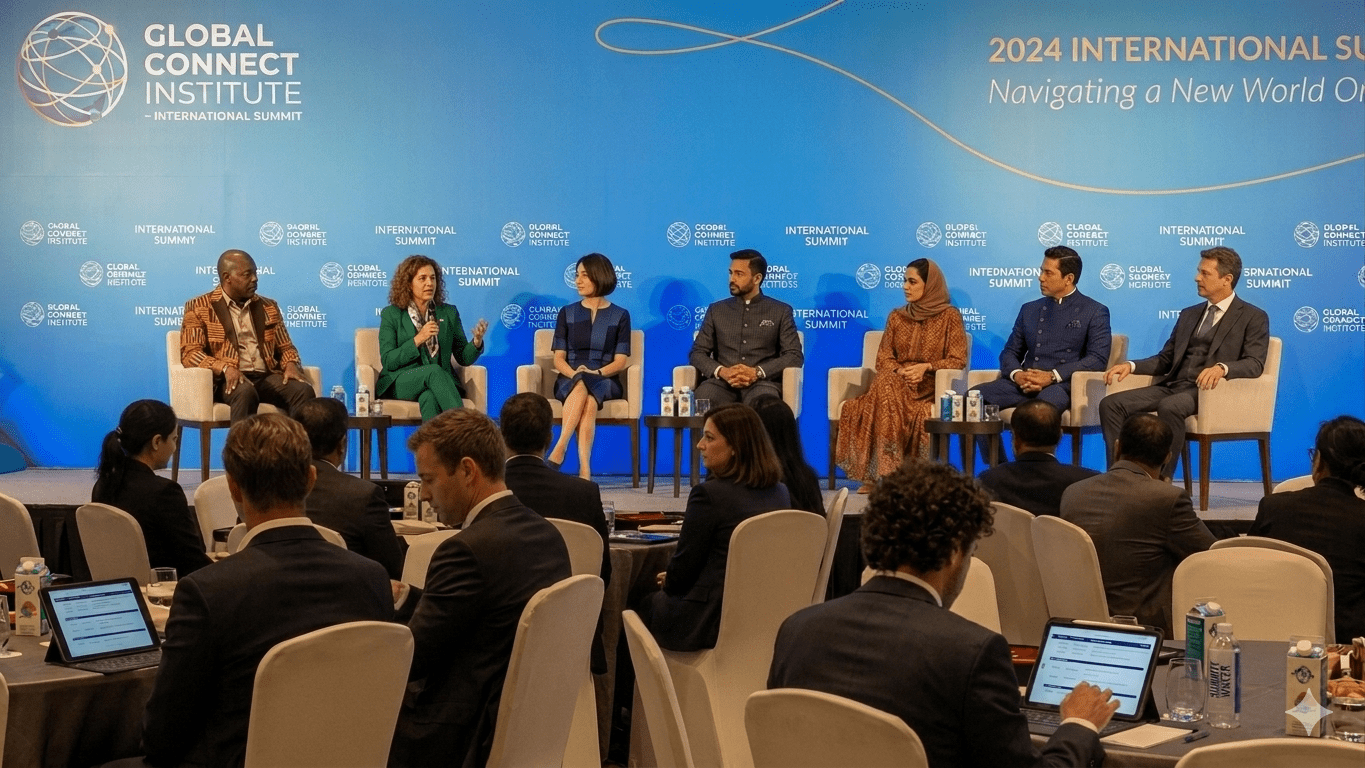
A well-moderated panel discussion showcases leadership, demonstrates credibility, and provokes fresh thinking. If you are invited to be a moderator, embrace the opportunity.
You will showcase your best qualities by creating the conditions for others to shine. When you do this well, the aura of leadership naturally attaches itself to you.
Here are several principles that set great moderators apart.
Understand the Role You Are Playing
When you are the speaker, the spotlight is on you. When you are the moderator, you become the spotlight operator. Your role is to facilitate an engaging, balanced conversation that allows panellists to deliver their best insights, while subtly representing your organisation well.
This requires a mindset shift. Resist the urge to impress with complex statements. Instead, guide the flow, manage the energy, and ensure every voice is heard. Equal airtime matters because it brings out the quality and variety of ideas within the panel.
Audiences quickly sense whether a moderator is in control. When you start strongly and set clear expectations, both panellists and listeners relax into the experience.
Prepare More Than You Think You Need To
Strong moderating begins long before you walk on stage.
Preparation starts with research: understanding the topic, the panellists, and the audience. Seek input from panellists in advance and listen carefully. Their perspectives help shape better questions, while understanding sensitivities helps you avoid surprises on the day.
A well-prepared session usually follows a simple arc:
- A short, sharp introduction with clear goals
- Concise, open questions that invite insight
- A forward-looking final question
- A closing that summarises key ideas and leaves the audience with something to consider
When preparation is done well, the conversation feels natural and the audience focuses on the ideas being shared.
Assume the Space With Purpose
Whether in person or virtual, audiences make rapid judgments based on limited data. How you enter the space matters.
In person, walk to your seat purposefully:
- Small steps
- Strong carriage
- A natural expression
Sit back in your chair to strengthen posture and ground yourself. Stay still and gesture only with intention.
Master small details in advance — microphone, water, notes — so nothing distracts you once the session begins.
Online, the same principles apply. Set your camera at eye level, remove notifications and background clutter, and keep your eyes steady on the camera. When you appear settled and in command of the environment, the audience trusts you to guide the conversation.
Prepare Just-Right Content
A moderator’s content is an unusual mix of brevity and authority. Every word must carry weight — demonstrating command of the topic while remaining concise.
Shorten your questions. Choose words deliberately. Turn the discussion back to the panellists quickly. Use acknowledgements and transitions to keep the conversation moving forward.
Throughout the session, your role is to reflect what is happening for the audience — acknowledging insights, connecting ideas, and guiding the discussion toward its purpose.
Manage Your Behaviour
Your body language, voice, expression, and pacing work together to reinforce confidence. When these elements align, you create a calm centre that others respond to.
Managing your executive presence requires awareness of the small behavioural shifts that make a difference in a panel setting. Skilled moderators remain attentive and composed even when they are not speaking.
Stay Focused as the Spotlight Operator
Effective moderators guide discussions with short, open questions that invite insight rather than monologues.
Great moderation feels natural to watch. In reality, it is the result of deliberate choices made before, during, and after every interaction.
Panel discussions remain powerful platforms for leadership communication. When you moderate with clarity, presence, and intent, you elevate not just the conversation — but everyone involved in it.
Red Shoe Communications helps leaders make deliberate choices in how they show up, facilitate dialogue, and communicate executive presence.